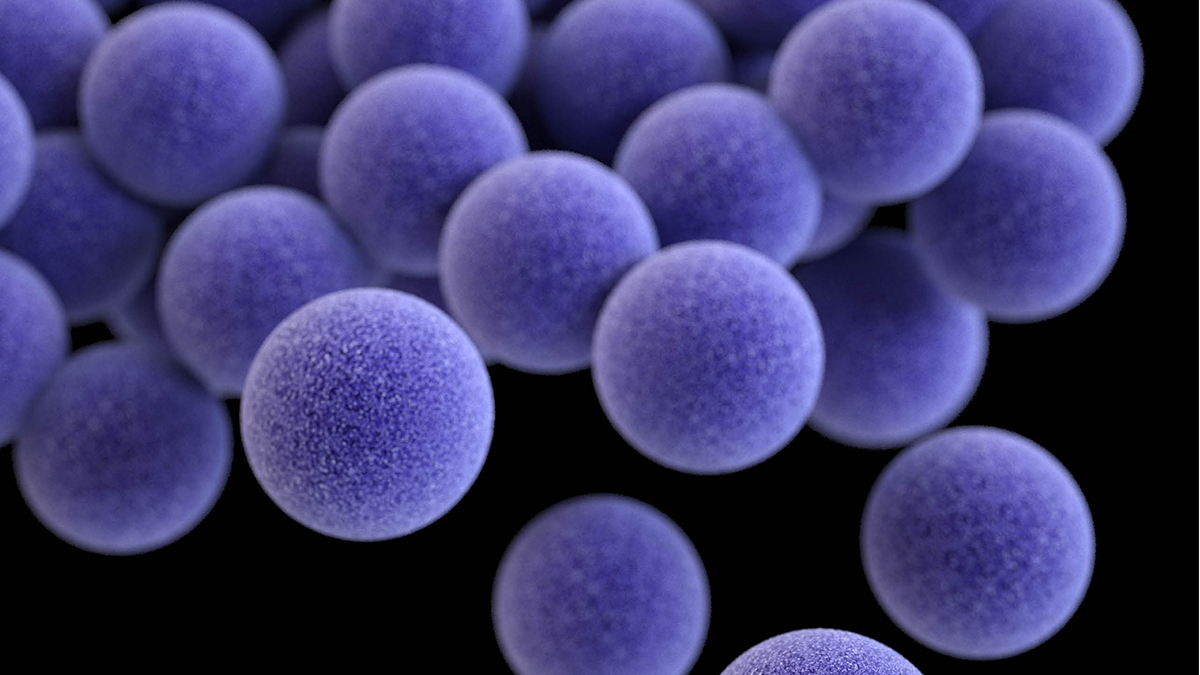
ASHEVILLE, N.C. (828newsNOW) — A paper published by a University of North Carolina Asheville biology professor and a team of 12 students has identified a promising development for combating drug-resistant Staphylococcus aureus, or staph bacteria.
The paper was led by Associate Professor of Biology Melinda R. Grosser, Ph.D., and an undergraduate student named Jenna Vidaud, and co-written by a team of 11 other UNC Asheville undergraduate students. Their research was published in the peer-reviewed Journal of Bacteriology by the American Society for Microbiology.
The paper revealed that disabling an enzyme called YqeK “can strip one of the world’s most dangerous drug-resistant bacteria of much of its power to harm — without a single antibiotic,” UNC Asheville said in a press release.
Staphylococcus aureus is a leading source of antibiotic resistance in the United States, making the discovery revelatory news for staph treatment.
The bacteria relies on YqeK to “clear a stress-signaling molecule that builds up under harsh conditions — like those it encounters inside the human body,” UNC Asheville explained.
When the scientists removed the enzyme from the bacteria, the bacteria continued to grow normally, but struggled under hostile lab conditions.
The staph bacteria became less toxic and lost the ability to destroy red blood cells, “a strong signal that they would cause milder disease during a real infection.”
Grosser explained that the discovery meant that new drugs could be developed for targeting the enzyme, rather than killing the bacteria, which could circumvent the staph bacteria’s ability to resist antibiotics.
“We were excited to find that this enzyme hardly matters during normal growth but becomes critical during conditions bacteria would face in a host,” she said. “That vulnerability makes it a promising target for new drugs that lessen the ability of S. aureus to cause disease, without imposing the same selective pressure to evolve resistance as drugs that kill bacteria directly.”
Several participating undergraduate students based their senior theses on the project, including Jackson Coker, now a medical student at East Tennessee State University, whose thesis contributed to securing funding for research, and Vidaud, who graduated from UNC Asheville with a double major in Biology and Chemistry & Biochemistry.
For more about the UNC Asheville research team, visit www.instagram.com/grosserlab.